EB-2 NIW Green Card Guide for OPT & STEM OPT Students
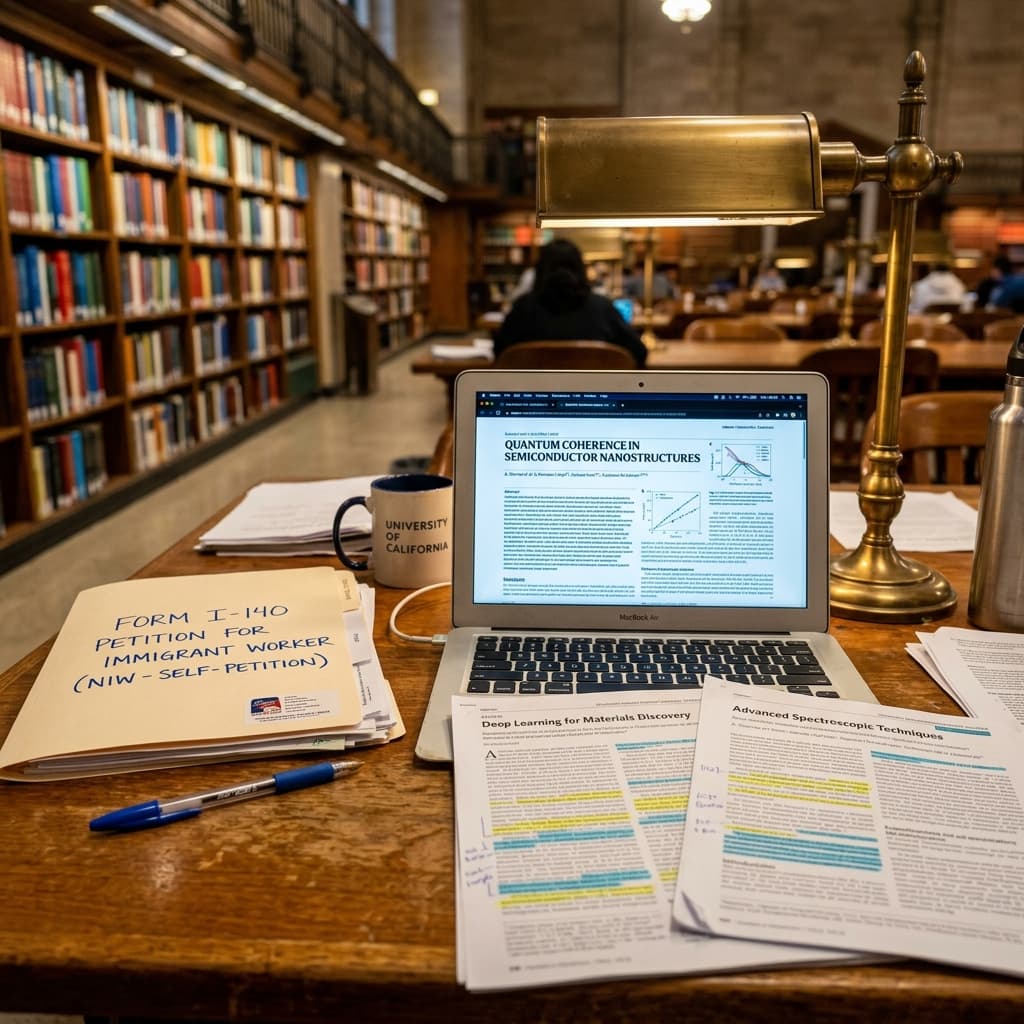
The EB-2 National Interest Waiver (NIW) is one of the most powerful immigration pathways for highly skilled F-1 students. It allows you to self-petition for a Green Card, skipping the employer-sponsorship and PERM Labor Certification requirements entirely.
TL;DR / Quick Answer
The EB-2 NIW is a self-petition Green Card option for students with a Master's or Ph.D. (or Bachelor's + 5 years experience). You don't need an employer or job offer. You must prove your work is of national importance, you are qualified to execute it, and the US benefits from skipping the PERM labor market test.
Key Takeaway
USCIS evaluates EB-2 NIW cases using a legal framework called Matter of Dhanasar. Preparing a strong proposed endeavor is the absolute key to success.
Source: Administrative Appeals Office (AAO) Dhanasar Precedent Decision
In This Guide
The Legal Framework: Matter of Dhanasar
To qualify for a National Interest Waiver, your petition must satisfy all three prongs established in the landmark case Matter of Dhanasar (2016):
Prong 1: Substantial Merit & National Importance
Your proposed work (endeavor) must have substantial merit in terms of science, business, or education, and offer broad benefits to the US.
Prong 2: Well-Positioned to Advance the Endeavor
USCIS looks at your credentials, publication history, education, patents, research, and expert letters to see if you have the capability to succeed.
Prong 3: Beneficial to Waive the Job Offer / PERM
You must argue that requiring a specific employer-sponsored job offer and labor certification would be impractical or would delay work of urgent national benefit.
Advanced Degree or Exceptional Ability
Before USCIS evaluates your waiver argument, you must meet the base EB-2 requirements:
- Advanced Degree: A US Master's or Ph.D. (or foreign equivalent), or a US Bachelor's plus 5 years of progressive post-graduation experience.
- Exceptional Ability: Meeting at least 3 out of 6 USCIS criteria (academic record, license to practice, 10 years experience, professional membership, recognition).
Step-by-Step Filing Process
Most students hire an immigration attorney, but self-filing is possible. Here is the workflow:
Define the Proposed Endeavor
Write a detailed personal statement explaining what research, business, or project you will pursue in the US and how it impacts the nation.
Gather Recommendation Letters
Secure 4 to 6 testimonial letters from independent experts, professors, or industry leaders verifying the importance of your work.
Assemble Exhibits
Compile your CV, degree transcripts, publication history, citations, media mentions, and copy of patents or project portfolios.
File Form I-140
Submit the Form I-140 package to USCIS. If you want a quick decision, you can pay for Premium Processing to get an adjudication in 45 days.
Important Caveats & F-1 Status Risks
Consolidate Your Case Records
TrackMyOPT helps you manage status details during major transitions. Log employer histories, timeline requirements, and maintain active status seamlessly.
Create Free AccountRelated Guides
Written by Vinay Kumar
Vinay is a content writer at TrackMyOPT who specializes in immigration guidance for international students. All content is researched using official USCIS, SEVP, and Department of Labor sources and reviewed for accuracy by the TrackMyOPT team, which includes former F-1 students who navigated OPT, STEM OPT, and H-1B transitions firsthand.