SEVIS Transfer Guide: How Moving Schools Impacts Your OPT
Planning to start a Master's degree or transition to a Day-1 CPT school? Read this before you request a SEVIS transfer, or you might accidentally work illegally.
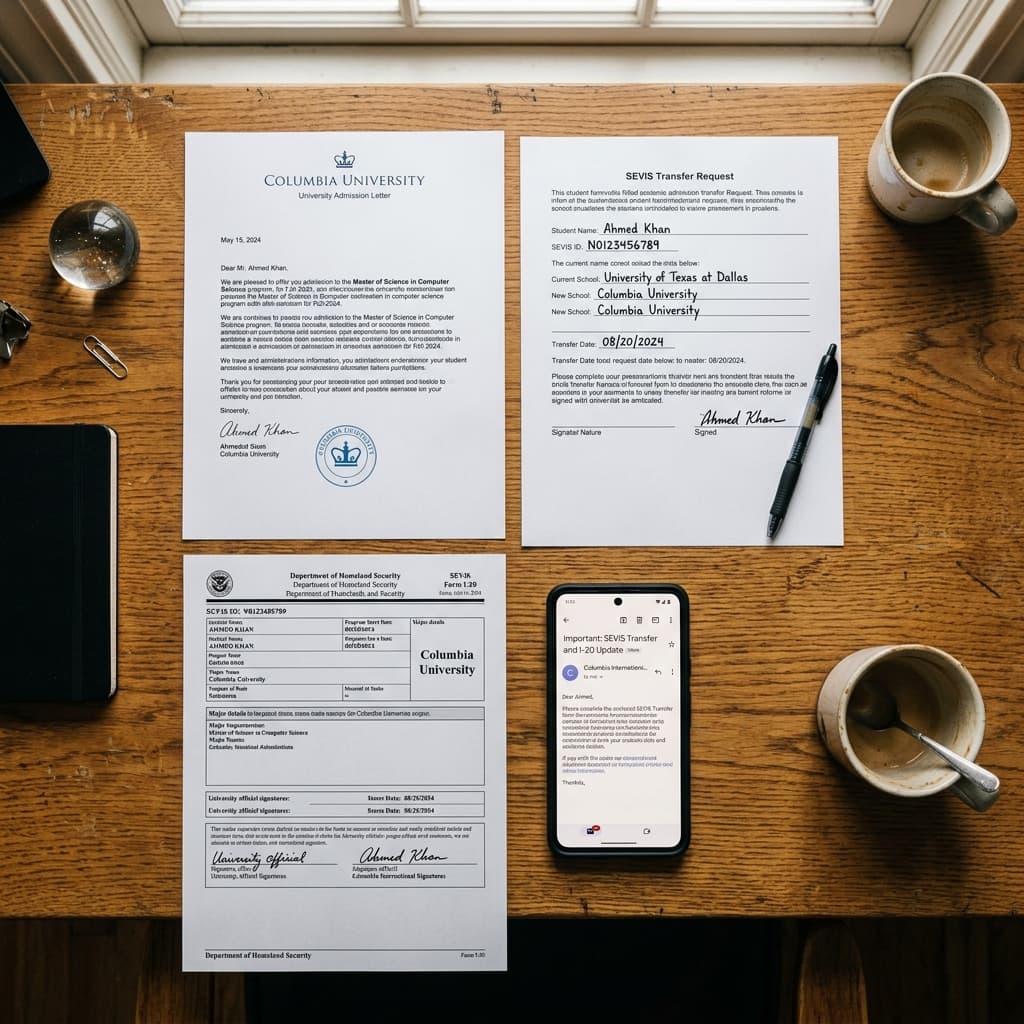
A SEVIS transfer allows you to move your F-1 student record from your current school to a new school without having to leave the US, pay the SEVIS fee again, or get a new visa stamp. While the process itself is straightforward, its impact on your current employment authorization (like OPT) is immediate and unforgiving.
The Golden Rule: Transfer = Cancellation
Immediate OPT Cancellation
The moment your SEVIS record is electronically transferred to your new school (on your "SEVIS Release Date"), your OPT or STEM OPT is immediately and irreversibly canceled.
Even if your EAD card says it is valid for another 6 months, it does not matter. The SEVIS transfer voids the underlying authorization. If you work even one day past your SEVIS release date, you are engaging in unauthorized employment, which can result in deportation and a permanent ban from the US.
Understanding the "SEVIS Release Date"
When you ask your current DSO to transfer your record, they will ask you for a SEVIS Release Date. This is the exact calendar day that ownership of your digital SEVIS record shifts from School A to School B.
How to Strategize Your Release Date
- If you are currently working on OPT: You should set your release date for the day after your last day of work. For example, if you plan to quit your OPT job on Friday, August 10th, you should set your SEVIS Release Date to Monday, August 13th.
- If you are in your 60-day grace period: If your OPT has already ended, you must request a SEVIS release date before your 60-day grace period expires.
The 5-Month Rule
To be eligible for a SEVIS transfer, classes at your new school must begin within 5 months of either:
- The date of your SEVIS release, OR
- The end date of your OPT authorization (or the end of your degree program), whichever is earlier.
If the gap between your OPT ending and your new master's degree starting is more than 5 months, you cannot do a SEVIS transfer. You will have to leave the US, get a brand new "Initial" I-20, pay a new SEVIS fee, and re-enter.
Transitioning to Day-1 CPT
A very common scenario is a student transferring from OPT to a Day-1 CPT master's program after failing the H-1B lottery. Because the SEVIS transfer instantly cancels your OPT, you will have a gap in work authorization.
The Work Gap Timeline
- August 10: Your last day working on OPT.
- August 11 (Release Date): SEVIS record transfers. OPT is canceled. You cannot work.
- August 11 to August 24: You are legally in the US, but you cannot work. (Unpaid leave of absence).
- August 25: Classes start at your new Day-1 CPT school. Your new DSO activates your CPT.
- August 26: You resume working for your employer under CPT authorization.
You must coordinate this gap perfectly with your employer's HR department. You must be taken off the payroll entirely during the gap period.
Pending H-1B Petitions (Cap-Gap)
If you were selected in the H-1B lottery and are currently working under the Cap-Gap Extension, requesting a SEVIS transfer will instantly cancel your Cap-Gap work authorization and may cause USCIS to deny your pending change of status to H-1B. Always consult an immigration lawyer before transferring schools if you have a pending H-1B.
Manage Your Transition Safely
Don't guess when your grace period ends or when your SEVIS transfer must be initiated. TrackMyOPT helps you map out your school transfers and alerts you to critical deadlines before you accidentally fall out of status.