J-1 Waiver (212e): How to Escape the 2-Year Home Residency Requirement
Subject to the dreaded two-year home residency rule? Learn the 5 legal pathways to obtain a 212(e) waiver so you can stay in the US and pursue an H-1B or Green Card.
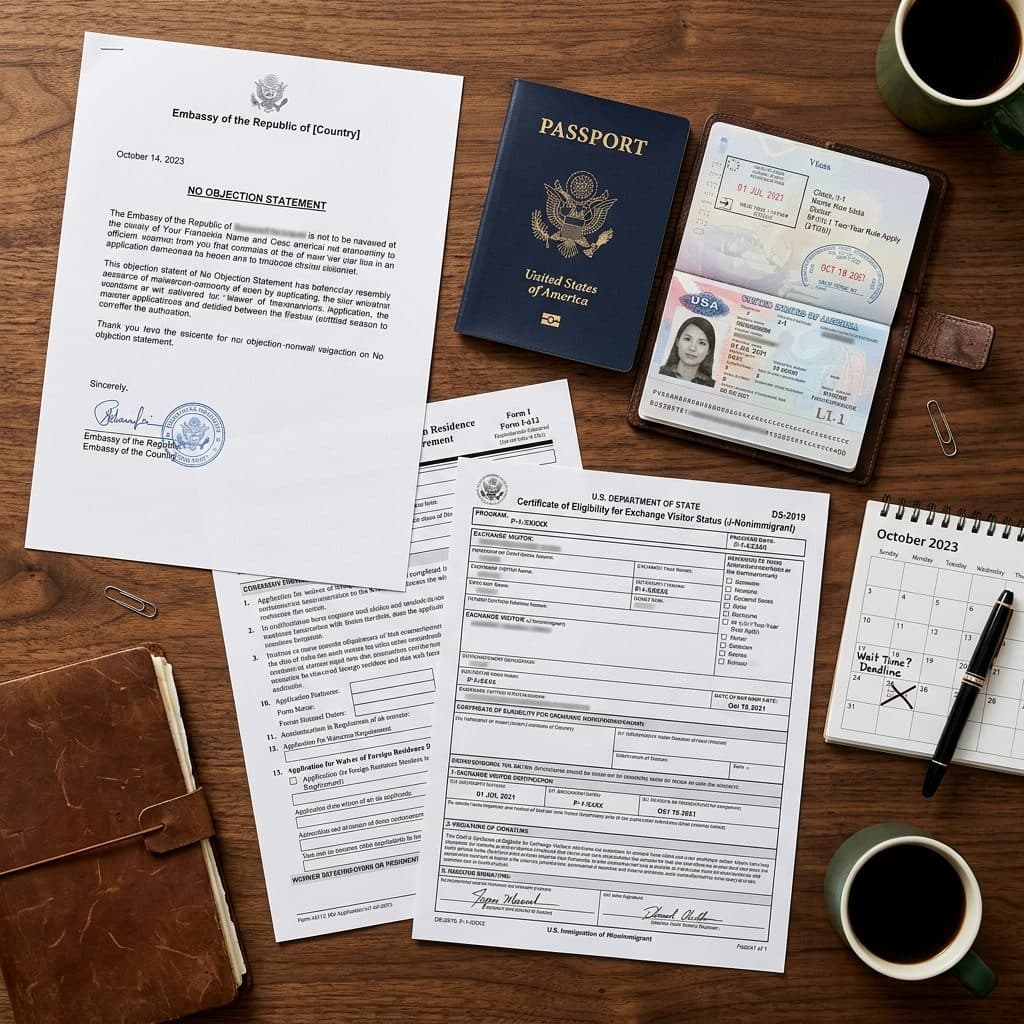
If you came to the US on a J-1 Exchange Visitor visa and your DS-2019 is annotated with "Subject to Section 212(e)," you are legally required to return to your home country for a cumulative period of two years before you can apply for an H-1B, L-1, K-1, or immigrant visa (Green Card). This article explains the 5 legal ways to waive this requirement.
Who Is Subject to the 212(e) Requirement?
Not every J-1 holder is subject to this rule. You are subject if any of the following apply:
- Government Funding: Your J-1 program was funded in whole or in part by your home country government or the US government.
- Skills List: Your field of study appears on your home country's "Exchange Visitor Skills List" maintained by the US Department of State. These are fields your country has identified as critical to its national development.
- Graduate Medical Education: You came to the US on a J-1 visa for medical training (residency or fellowship).
Check Your DS-2019 First
Look at item #3 on your DS-2019. If it says "Not subject to two-year requirement," you are free to change status to H-1B or apply for a Green Card without any waiver. If it says "Subject to section 212(e)," keep reading.
The 5 Ways to Get a 212(e) Waiver
1. No Objection Statement (NOS) — Most Common
Contact the embassy of your home country in Washington, D.C. and request a "No Objection Statement." This is a letter from your government stating they have no objection to you remaining in the US. You then submit this letter to the US Department of State's Waiver Review Division. Processing time: 4-8 months. This is by far the most commonly used and most successful method.
2. Request by Interested Government Agency (IGA)
If a US federal government agency (e.g., NASA, NIH, the Department of Defense) believes that your work is essential to their mission, they can request a waiver on your behalf directly to the Department of State. This is rare but extremely powerful.
3. Persecution Waiver
If you can demonstrate that returning to your home country would subject you to persecution on the basis of race, religion, or political opinion, you can apply for a persecution-based waiver. This is essentially a mini-asylum claim. You must provide substantial documentary evidence.
4. Exceptional Hardship to a US Citizen/Permanent Resident Spouse or Child
If you are married to a US citizen or permanent resident, and your departure from the US for 2 years would cause "exceptional hardship" (not just inconvenience) to your spouse or child, you can file for a hardship waiver. Requires extensive documentation of financial, medical, and family ties. This is a very high legal bar to meet.
5. Conrad State 30 Waiver (Doctors Only)
If you came to the US on a J-1 visa for Graduate Medical Education, you can receive a waiver from a state Department of Health if you agree to practice medicine for 3 years in a medically underserved area. Each state is limited to 30 waivers per fiscal year.
What Happens While the Waiver Is Pending?
You can remain in the US in your current J-1 status while your waiver application is pending. However, you cannot change to H-1B or any other status until the waiver is formally approved by the Department of State and a favorable recommendation is sent to USCIS.
If the waiver is denied, you must fulfill the two-year home residency requirement before you can change status. There is no appeal process—you would need to file a new waiver application under a different basis.
Keep Your Immigration Documents Organized
The J-1 waiver process requires uploading copies of your DS-2019, passport, visa stamps, and program sponsor letters. TrackMyOPT's Document Safe ensures all your immigration documents are securely stored, organized, and instantly accessible when you need them for your waiver application or any future immigration filing.
Can You Just Go Home for 2 Years Instead?
Yes, that is always an option. The 2 years are cumulative, not consecutive. However, practically speaking, leaving the US for 2 years means losing your job, your apartment, your credit history, and your professional network. Most people find it far more practical to apply for a waiver.
Secure Your Immigration Documents
Whether you are navigating a J-1 waiver, transitioning to H-1B, or applying for OPT, TrackMyOPT keeps all your critical documents in one place. Never scramble to find a form again.